What are HPC Systems?
High Performance Computing (HPC) systems are specialized computing environments designed to solve computationally intensive problems that require significant processing power, memory, or storage resources.
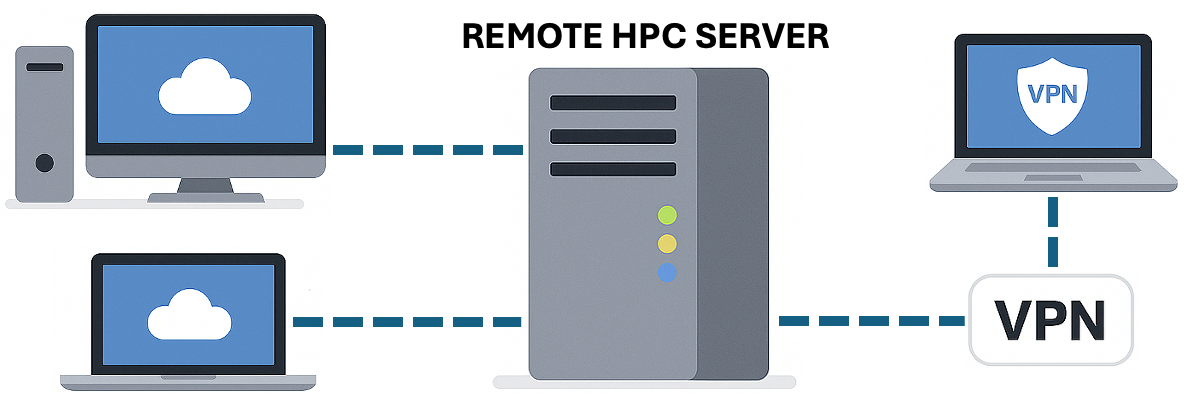
Key Characteristics of HPC Systems
Parallel Processing: HPC systems typically consist of multiple compute nodes (individual computers) connected via high-speed networks, allowing tasks to be distributed across many processors simultaneously.
Shared Resources: Unlike personal computers, HPC systems are shared among multiple users, requiring job scheduling systems to manage resource allocation fairly and efficiently.
Specialized Hardware: HPC clusters often include:
- Multiple CPU cores per node
- Large amounts of RAM (64GB-1TB+ per node)
- High-speed interconnects
- Specialized processors (GPUs for certain workloads)
- High-performance storage systems
Batch Processing: Most HPC work is submitted as “jobs” to a queue, rather than running interactively.
When to Use HPC
Consider using HPC systems when your computational tasks involve:
- Long-running calculations
- Large memory requirements
- Parallel processing opportunities
- Large datasets that don’t fit on personal computers